Accountability and collaborative care: how interprofessional education promotes them
Iliadi Panagiota
MSc, Midwife, Laboratory Collaborator Midwifery Department, School of Health and Welfare, A.T.E.I. of Athens
- *Corresponding Author:
- Panagiota Iliadi
5, El. Venizelou Str.
Ag. Paraskevi 153 41
Athens – Greece
Tel: 6977 966241
E-mail: iliadip@otenet.gr
Abstract
Accountability and collaborative care are two meanings often mentioned in the health professionals’ code of practice. Aim: The aim of the present literature review was to explore the meaning of accountability, collaboration and collaborative care. Method and Material: Pubmed and Scholar Google were searched for relevant studies by using the words “accountability”, “collaborative care” and “midwifery” as key words, as well as the South Bank University Library for relevant books. Results: The research revealed 21 studies, mainly British and American. Five studies were referring to the contemporary situation in midwifery practice, seven of them were exploring how accountability obliges health professionals to work collaboratively with other professionals and nine of them were seeking how interprofessional education promotes collaborative care. Conclusions: Health professionals have to work in a collaborative manner not only with other professionals, but also with patients and their families, while interprofessional education plays a significant role in the formation of an effective team.
Keywords
Accountability, collaborative care, midwifery
Introduction
Accountability and collaborative care are two meanings indissolubly connected to each other and the main subject of discussion on professional practice. As the complexity of health and welfare services is growing, the medical knowledge is expanding and the specialization is increasing, the need for bringing together separate but interlinked professional skills has become urgent. Single providers or disciplines are no longer able to meet all the health care needs of an individual. Therefore, health professionals are urged to work together in teams. Recent studies showed that interprofessional team working in the health care field leads to more efficient use of staff, more effective service provision and a more satisfying work environment.[1]
On the other hand, inter-professional pitfalls have included time-consuming consultation, administrative and communication costs, differing leadership styles, language and values between professional groups, separate training backgrounds, inequalities in status and pay, conflicting professional and organizational boundaries and loyalties, lack of clarity about roles and negative mutual perceptions and latent prejudices [1]. As a result, it is crucial for the well-functioning of a team the members to have explicit roles, to know to whom they are accountable and for what. Moreover, the need for interprofessional education among different health care professions is clearer than ever.
In this paper, it will be discussed what accountability is for a health professional as an individual and as a team member, what collaboration and collaborative care means, how accountability obliges caregivers to work collaboratively with other professionals, a theoretical model that could be applied in collaborative health care and finally how interprofessional education promotes collaborative care.
Definitions of accountability, collaboration and collaborative care
According to the definition of the Oxford Paperback Dictionary and Thesaurus, accountable means responsible, required to account for one’s conduct [2]. A health professional is personally accountable for actions and omissions in his/her practice and must always be able to justify his/her decisions. He/she must always act lawfully, whether these laws relate to his/her professional practice or personal life [3]. For midwives, the concept of accountability becomes more specific as each midwife is accountable for her own practice in whatever environment she practices. The standard practice in the delivery of midwifery practice shall be that which is acceptable in the context of current knowledge and clinical developments. In all circumstances the safety and welfare of the mother and her child must be of primary importance [4].
On the other hand, collaboration is an interprofessional process of communication and decision-making that enables the individual knowledge and skills of health professionals to synergistically influence the provided care. It is a relation of interdependence built on respect and understanding of the unique and complementary perspectives each profession makes to achieved desired outcomes [5,6].
Collaborative care refers to initiatives or activities that aim to strengthen links between different providers working together in a partnership characterised by common goals, a recognition of and respect for individual strengths and differences, equitable and effective decision-making, a focus on the patient and clear and regular communication [6,7].
Accountability and collaborative care
Accountability is an integral part of midwifery practice. Midwives must be competent to give the necessary supervision, care and advice to women during pregnancy, labour and the postpartum period, conduct deliveries on their own responsibility and take care of the new-born [4,8,9].
They are responsible for the mother and her child during the perinatal period, but in case of emergency or deviation from the normal, midwives are obliged to call a registered medical practitioner [9,10]. Their professional code of practice obliges them to work collaboratively with doctors in pathological cases.
They are, also, obliged to collaborate with other health professionals under ordinary circumstances in order to meet with the needs of the women and her family. According to the code of professional conduct, a registered nurse, midwife or health visitor is personally accountable for his/her practice and in the exercise of his professional accountability, he must work in a collaborative and co-operative manner with healthcare professionals and others involved in providing care, and recognise and respect their particular contributions within the care team [8,11].
However, even as members of a multidisciplinary team, midwives maintain their professional accountability. Moreover, if a midwife is delegating care to another professional, health care support staff, carer or relative, she must delegate effectively and is accountable for the appropriateness of the delegation. The code requires that nurses and midwives must establish that anyone they delegate to be able to carry out their instructions, confirm that the outcome of any delegated task meets required standards and make sure that everyone they are responsible for is supervised and supported [8].
The present situation in midwifery care
It has been widely asserted that the combined knowledge and skills of many disciplines are required to meet people’s health needs in today’s society. Collaborative practice provides greater opportunities to educate and counsel patients with the goal of preventing disease, promoting wellness and increasing compliance with treatment regimes during illness [12-14].
However, midwives appear to be reluctant to co-operate and co-ordinate their activities with other health care professionals, especially with doctors. The findings of studies in teamwork showed that midwives were not well integrated team members. They viewed themselves as independent practitioners of equal status to general practitioners’, outside of the Primary Health Care Team. This was not a situation they were dissatisfied with [6,15].
What seems to be the cause of this reluctance is the relationship between doctors and midwives; a relationship often described as highly charged, traditionally antagonistic and prone to conflict [6,15,16].
Midwives, contrary to other professions allied to medicine, are practitioners in their own right. The Midwives Code of Practice enables the midwife’s autonomy, as she only needs to refer to a medical practitioner when an abnormal situation occurs. The stature expects full professional accountability from the midwife within her sphere of practice [15].
In order to have autonomy, midwives fought quite hard to gain it. They had to fight against male dominance, which had excluded women from science fields. Although women had been the traditional birth attendants, with the emergence of science in universities, doctors dismissed the treatment offered by women as superstitious folklore. Doctors appeared to be fearful of encroachment on their practice and livelihoods [17].
Due to this fact, midwives feel that by being members of a multidisciplinary team, especially with doctors, put their independence in jeopardy. This fear gets larger, when they are not treated as equal members of the teams. Even today, there are still doctors who seem to forget the fully independent status of midwives. They can take over decision making without listening to midwifery ideas, but still think that midwives would be useful in relieving them of some of the tiresome work of childbirth [6,15,17,18].
Finally, midwives and doctors see childbirth differently. For midwives, giving birth to a child is a natural process which does not need any human intervention. For doctors, it is a dangerous process which must be all the time under instrumental control. As a result, medical and midwifery staff at all levels often have conflicting views of each others sphere of concern; normal versus abnormal [6,15,16].
The user-central model of help
The needs of the mother and the child must be the primary focus of midwives’ practice. Instead, everybody occupies themselves with the pursuit of power. The user-central model puts the person in need of help at the centre of the picture. In this model, the word “user” describes the individual, couple, family or other group which uses help. “Face workers” are the human face of the health services, all the people who work directly with the users inside or outside the formal helping services [19]. In midwifery, users are the women in pregnancy, labour and postpartum period, and their families. Face workers could be the midwives, the doctors, the health visitors, the social workers etc.
As one can see, in this model (Figure 1), everyone is working for the user; health and social services, private sector, voluntary agencies, community, family and the user him/herself. The user woman is acknowledged as the most important member of the team, as every care decision concerns her. The helpers and the woman work together in the planning, implementation and evaluation of her care, trying to empower the woman to exercise freedom of choice. The user is an active participant in her care, whose views and choices are respected and the decision making is based on them. All team members are equal. Each one has his/her own role and they maintain their professional accountability [6,20].
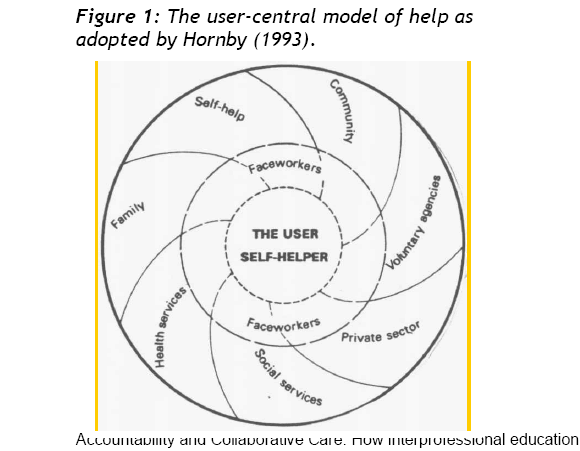
Figure 1: The user-central model of help as adopted by Hornby (1993).
Among the team members, three types of collaboration can exist: primary, secondary and participatory collaboration. Primary collaboration begins when user and faceworker start working together to cope with a difficult situation [19]. Applying it in midwifery there is primary collaboration between a midwife and a pregnant woman who are making a birth plan.
Secondary collaboration exists among several helpers who work together for the benefit of the user without his/her presence [19]. In midwifery, secondary collaboration could exist between a midwife, an obstetrician and an endocrinologist who are dealing with a diabetic woman with twin pregnancy.
Finally, participatory collaboration describes the relationships between the individual and the group of helpers; when the user is present and takes part in the decision-making [19]. Participatory collaboration could be the above example but with the woman present, taking part in the decision making of her pregnancy continuation and the delivery.
The user-centred model is an approach where all team members are equal, everyone maintains their professional accountability, trying to do their best to help the user-woman; the woman who is at the centre of this effort and at the same time is working with the others for her care.
Interprofessional education and collaborative care
Interprofessional education means that two or three professions are learning together on an interactive basis. It offers a way to improve collaborative care, as studies have shown that interprofessional education has positive effect on emergency department culture and patient satisfaction, collaborative team behaviour and reduction of clinical error rates, management of care delivered to domestic violence victims and health mental practitioner competencies related to the delivery of patient care [15,21-23].
On the other hand, interprofessional education must confront a number of challenges – barriers. Firstly, there are attitudinal barriers. Many health professionals regard interprofessional education with demerit, as something insignificant to use precious resources for. Some of these professionals work in relative isolation and have little contact with other professions. Others work with many professional groups, but have little regard for their work and think of their own profession as pre-eminent or all-important. Sometimes a form of professional arrogance is displayed whereby the professional looks down on others. Another barrier is the fact that the roles and relationships of various health professions are unclear. Studies have revealed that many health professionals have an inadequate understanding of the role and skills of other professions and sometimes a hazy awareness of the working relationships. Moreover, the roles of many health professionals overlap substantially and few of them have learnt to analyse the situations emerging in multi-professional teamwork. Another major barrier is organizational. There are differences in prerequisites for admission to professional education, in the length of the professional education, the extent and nature of the utilisation of community and hospital resources for practice, the methods of administration within the various programmes, there are also students’ freedom in the selection of professional courses, time-tabling differences and conflicts across professional programmes. Finally, the most significant barrier of all is financial, since the costs of multi-professional education span many professional budgets [21,24].
These barriers can be overcome by developing a number of principles for the implementation of collaborative professional education. These principles are:
• Neutral base of operation. A neutral frame of reference for professional practice is essential if professionals are to overcome their inclination to protect their own turf. Also, it is crucial for the neutrality of the program the selection of the location, the person who provides leadership and the sources of funding.
• Administrative support. Scheduling meetings, developing agendas, providing housing and hospitality, observing team process, facilitating discussion, providing for evaluation and follow-up require administrative support, either wise nothing will be accomplished with any consistency or duration.
• Shared interest/commitment
• Shared credit. A collaborative enterprise can be successful, only when team members are willing to give credit to the team and not seek recognition for their individual work.
• Shared resources
• Partnership with the community. Collaboration which is only between health professionals will possibly not meet with the needs of patients and their families.
• Training in collaborative skills
• Building horizontal bridges between antagonistic professions
• Rewards. Individuals and institutions need to be rewarded for collaborative efforts. Criteria for promotion, salary increases and institutional funding need to include measures of collaborative practice [25].
The situation seems better when the interprofessional education starts early in the professional career. Studies revealed that interprofessional education introduced at the beginning of pre-registration training for health professionals prevents the formation of negative interprofessional attitudes which will hamper future interprofessional collaboration. Moreover, the strength of professional identity in all professional groups is high on entry to university but it declines significantly over time for some disciplines. Similarly students’ readiness for interprofessional learning is high at entry but declines significantly over time for all groups. A small positive relationship between professional identity and readiness for interprofessional learning is maintained over time [26-31]. Therefore, interprofessional education must be substantial part of the pre-registration studies to facilitate the transition to collaborative care.
Conclusions
Every health professional, in the exercise of his/her accountability, must safeguard and promote the interests of individual patients and clients and serve the interests of the society. For their patients’ best interest, health professionals have to work in a collaborative and co-operative manner, not only with other professionals but also with the patients and their families.
Being a member of a multidisciplinary team is not an easy situation, as everyone comes from a different background. The team members need to have defined roles, common goals and interests and the planning is essential to the team’s function. Interprofessional education seems to play an essential role in the formation of an effective team, as professionals have already learned and experienced what teamwork means.
Bibliography
- Leathard A. Inter-professional developments in Britain - An overview in Leathard A. (ed). Going Inter-professional - Working Together for Health and Welfare. Routledge. London and New York, 1994.
- Elliot J., Knight A., Cowley C. The Oxford Paperback Dictionary and Thesaurus. Oxford University Press. Oxford, 1997.
- Nursing and Midwifery Council (NMC). Accountability. NMC Web site.
- Available at https://www.nmcuk.org/aDisplayDocument.aspx-documentID=4018,2008a.
- United Kingdom Central Council forNursing, Midwifery and Health Visiting(UKCC). The Midwife's Code of Practice.UKCC. London, 1994.
- Makaram S. Interprofessionalcooperation. Medical Education. 1995;29Suppl 1:65-9.
- Orchard C.A., Curran V., Kabene S.Creating a Culture for InterdisciplinaryCollaborative Professional Practice.Medical Education Online. 2005;10:11.
- Family Health Teams. Guide toCollaborative Team Practice. FamilyHealth Teams. Ontario, 2005.
- Nursing and Midwifery Council (NMC). Thecode - Standards of conduct, performance and ethics for nurses and midwives. NMC Web site. Available at https://www.nmcuk. org/aDisplayDocument.aspx-document ID=3954, 2008b.
- Ministry of Education and Communions (YPEPTH). Occupational Rights of Midwifery Graduates. YPEPTH Web site. Available at https://www.ypepth.gr/el_ec_page1122.htm, 2009.
- United Kingdom Central Council for Nursing, Midwifery and Health Visiting (UKCC). Midwives Rules. UKCC. London, 1993.
- United Kingdom Central Council for Nursing, Midwifery and Health Visiting(UKCC). Code of Professional Conduct, 3rdedition. UKCC. London, 1992.
- Hutt A. What exactly is the TeamApproach? Midwife, Health Visitor andCommunity Nurse. 1986; 22(10):340-41.
- Lawrence H. Not either/or, butobstetricians and midwives together.Midirs Midwifery Digest. 1998;8(1):22-23.
- Xyrichis A., Lowton K. What fosters orprevents interprofessional teamworkingin primary and community care? Aliterature review. International Journalof Nursing Studies. 2008;45(1):140-53.
- Peterson W., Medves J., Davies B.,Graham I. Multidisciplinary CollaborativeMaternity Care in Canada: Easier SaidThan Done. Journal of Obstetrics andGynaecology Canada. 2007;880-86.
- Opoku D. Does Interprofessional CooperationMatter in the Care of BirthingWomen? Journal of InterprofessionalCare. 1992;6(2):119-125.
- Mcanulty L. Midwifery: Professionalismand Professionalisation. DistanceLearning Centre of South Bank University.London, 1993.
- Warwick C. The Midwife in the LabourWard Team. Midwife, Health Visitor andCommunity Nurse. 1986;22(9):298-99.
- Hornby S. Collaborative Care:Interprofessional, Interagency andInterpersonal. Blackwell ScientificPublications. London, 1993.
- Royal College of Nursing (RCN). Standards of Care Midwifery. RCN. London, 1993.
- Goble R. Multi-professional education in Europe in Leathard A. (ed) Going Inter-
- Professional ? Working Together for Health and Welfare. Routledge. London and New York, 1994.
- Reeves S., Zwarenstein M., Goldman J.,Barr H., Freeth D., Hammick M., et al. Interprofessional education: effects on professional practice and health care outcomes. Cochrane Database Systematic Review.2008;23(1): CD002213Priest H., Sawyer A., Roberts P., Rhodes S. A survey of interprofessional educationin communication skills in health care programmes in the UK. Journal of Interprofessional Care. 2005;19(3):236-50.
- Gilbert J. Interprofessional Education for Collaborative, Patient-Centred Practice. Nursing Leadership. 2005;18(2):32-38.
- Casto M. Inter-professional work in the USA ? education and practice in Leathard A. (ed) Going Inter-Professional ? Working Together for Health and Welfare. Routledge. London and New York, 1997.
- Coster S., Norman I., Murrells T., Kitchen S., Meerabeau E., Sooboodoo E., et al.Interprofessional attitudes amongst undergraduate students in the health professions: a longitudinal questionnaire survey. International Journal of Nursing Studies. 2008;45(11):1667-81.
- Polland K.C., Miers M.E., Gilchrist M., Sayers A. A comparison of interprofessional perceptions and working relationships among health and social care students: the results of a 3-year intervention. Health and Social Care in the Community. 2006;14(6):541-52.
- Polland K.C., Miers M.E., Gilchrist M. Collaborative learning for collaborative working? Initial findings from a longitudinal study of health and social care students. Health and Social Care in the Community. 2004;12(4):346-58
- Morison S., Jenkins J. Sustained effects of interprofessional shared learning on student attitudes to communication and team working depend on shared learning opportunities on clinical placement as well as in the classroom. Medical Teacher. 2007;29(5):464-70.
- Kearney A.J. Facilitating interprofessional education and practice. Canadian Nurse. 2008;104(3):22-6. 31. Hind M., Norman I., Cooper S., Gill E., Hilton R., Judd P., et al. Interprofessional perceptions of health care students. Journal of Interprofessional Care. 2003;17(1):21-34.

Open Access Journals
- Aquaculture & Veterinary Science
- Chemistry & Chemical Sciences
- Clinical Sciences
- Engineering
- General Science
- Genetics & Molecular Biology
- Health Care & Nursing
- Immunology & Microbiology
- Materials Science
- Mathematics & Physics
- Medical Sciences
- Neurology & Psychiatry
- Oncology & Cancer Science
- Pharmaceutical Sciences