Factors associated with teenage pregnancy in south asia: a systematic review
Acharya Dev Raj
Acharya Dev Raj1*, Bhattarai Rabi2, Poobalan Amudha3, van Teijlingen Edwin R4 and Chapman Glyn5
1MSc, MA, Project Assistant, Epidemiology Group, School of Medicine and Dentistry, Section of Population Health, University of Aberdeen, Scotland, UK.
2MSc, Institute of Applied Health Sciences, Department of Public Health, School of Medicine and Dentistry, University of Aberdeen, Scotland, UK.
3MBBS, Teaching Fellow, Section of Population Health, School of Medicine and Dentistry, University of Aberdeen, Scotland, UK
4PhD, MEd, MA (Hons) Professor, Maternal & Perinatal Health Research, School of Health & Social Care, Bournemouth University, England, UK.
5MGenMed, MPH, Clinical Tutor & Honorary Public Health Lecturer, College of Life Sciences and Medicine, Suttie Centre for Teaching and Learning, University of Aberdeen, Scotland, UK.
- *Corresponding Author:
- D. R. Acharya
Epidemiology Group, Section of Population Health
Institute of Applied Health Science
Foresterhill, University of Aberdeen
Aberdeen AB25 2ZD, UK.
Tel: +44 01224 552968
Fax: +44 01224 550925
E-mail: d.acharya@abdn.ac.uk, devranju@yahoo.com
Abstract
Background: South Asia has a large proportion of young people in the world and teenage pregnancy has emerged as one of the major public health problem among them. The objective of this study is to systematically review to identify the risk factors associated with teenage pregnancy in South Asian countries. Methods: We systematically searched MEDLINE, EMBASE and CINAHL database (1996 to April 2007) and web-based information. Inclusion criteria were the English-language papers available in the UK and describing teenage pregnancy in South Asia. Results: Out of the seven countries in South Asia, most of the studies were related to Nepal, Bangladesh, India and Sri Lanka. Socio-economic factors, low educational attainment, cultural and family structure were all consistently identified as risk factors for teenage pregnancy. Majority of teenage girls are reported with basic knowledge on sexual health however, very few of them have used the knowledge into practice. Both social and medical consequences of teenage pregnancies are reported consistently along the most of the studies. Utilization of health services, which is a protective factor, remains low and consistent. However, teenagers agreed to delay the indexed pregnancy if they would know its consequences. Conclusions: In South Asia, many risk factors are a part of socio-economic and cultural influences. This systematic review is limited by the amount and the quality of papers published on factors associated with teenage pregnancy. In particular, future research in South Asian countries is needed with standardised measures and methodologies to gain an insight into observed variations in pregnancy rates.
Keywords
Teenage pregnancy, factors, South Asia, young people
Introduction
Teenage pregnancy is a public health concern both in developed and developing world [1,2,3]. Globally 15 million women under the age of 20 give birth, representing up to one-fifth of all births [4] and 529,000 women die due to pregnancy and child birth related complication every year [5]. The risk of death due to pregnancy-related causes is double among women aged 15-19 compared to women in their twenties [6]. Young women are also at risk of unwanted pregnancies, sexually transmitted infections (STIs) and unsatisfactory or coerced early sexual relationships [7,8].
In the developing world, one-third to one-half of women become mothers before the age of 20 and pregnancy related complications have become the leading causes of death among them [9,10]. South Asian countries (India, Pakistan, Sri Lanka, Nepal, Maldives, Bhutan and Bangladesh) have high proportions of teenage pregnancies, since early marriage is common and there is a social expectation to have a child soon after marriage [11,12,13]. A study showed that nearly 60% of all girls are married by the age of 18 years and one fourth are married by the age of 15 years in South Asia [14].
Within South Asia, the recorded teenage pregnancy rate is highest in Bangladesh 35% followed by Nepal 21% and India 21% [15]. Teenage pregnancy can have significant effect on the level of education of women, their employment opportunities and marital stability and it increases their economic and social dependency on family and neighbours [16]. Although teenagers represent a large proportion of population in the developing countries, still relatively little is known about their sexual knowledge and experience and the risk associated with the teenage pregnancy [17,18,19]. In recent years reviews have been conducted on teenage pregnancies in developing countries or in ethnic minorities [20,21] but none of them have specifically focused on South Asian teenagers. This is a gap as there are cultural variations and differences and consequently the attitudes of teenagers could be different from other parts of Asia. The objective of this systematic review is to identify young people’s knowledge, attitude and behaviour, risk factors, utilisation of health services and consequences associated with teenage pregnancy in South Asia.
Materials and methods
The methodology of this review draws from methods developed by NHS Centre for Reviews and Dissemination [22]. Three electronic bibliographic databases, MEDLINE, EMBASE, and CINAHL were searched systematically for the period 1996 to April, 2007. Mesh terms and key words for young people, teenage pregnancy and South Asia were combined with the Cochrane Collaboration strategy for identifying primary studies. English-language papers available in the UK and describing teenage pregnancy in South Asia were retrieved and reviewed. The MEDLINE search strategy was adapted for searching other databases. Reference lists of all articles were checked to identify further relevant studies. Due to resource constrains searching of the grey literature and hand searching was not done.
Primary studies of any study design that looked at knowledge, attitudes, consequences, risk factors and behaviour associated with teenage pregnancy in South Asia were included. The term ‘factor’ does not imply causality but only associations for the purpose of this review. All identified abstracts were checked against the inclusion and exclusion criteria agreed a priori, independently by two reviewers. Any studies with pregnancy (conception) as an outcome measure were included; studies that only used proxy outcome measures of pregnancy, such as reproductive health or childbearing (parenthood), were excluded. Any queries about inclusion were discussed between reviewers or referred to a third reviewer if necessary.
Full texts of all the potentially eligible reviews were obtained and critically appraised. A data extraction form was developed and piloted. One reviewer extracted data from identified studies and this was checked by the second reviewer. Discrepancies were resolved by consensus or arbitration. The following data were recorded: author; year of publication; type of study; location; setting(s); age group; sample size and methodology. All the included studies were assessed for methodological quality using assessment checklist [23,24,25], however studies were not rated or excluded on the basis of the overall quality rating.
Results
Details of the search and study selection results are shown on the flow chart in Figure 1. A total of ten studies met all criteria and have been reviewed and included in this paper.
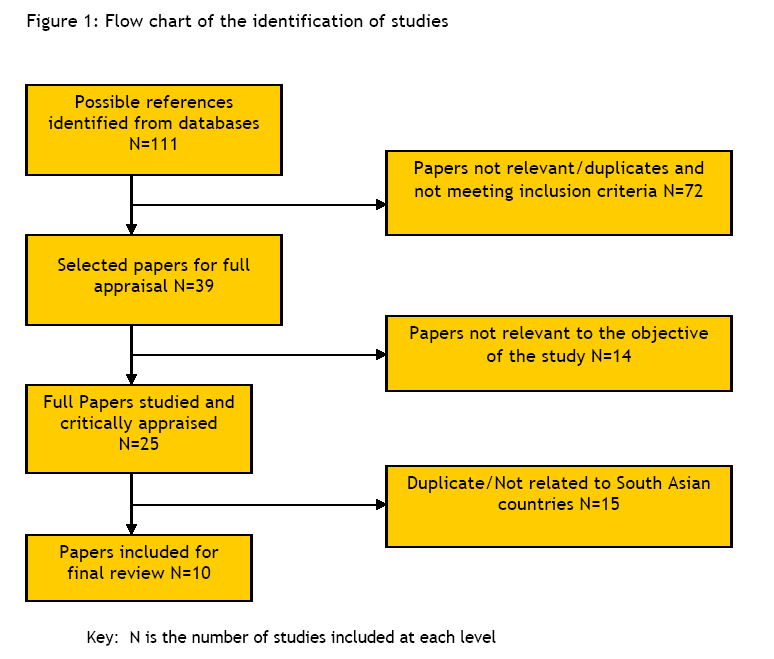
Figure 1: Flow chart of the identification of studies
Overview of studies
Of the ten included articles, three studied the sexual health knowledge, attitude and behaviour, nine studies looked at risk factors of teenage pregnancy, three discussed the utilisation of health services and nine studies examined the consequences of teenage pregnancy. Of those studies, three were conducted in Nepal, four in India, two in Sri Lanka and one in Bangladesh. Each study has included more than one outcome and varied according to the settings such as; location, target group, method of data collection and analysis. The studies also varied according to the methodological quality (Table 1).

Risk factors for teenage pregnancies in South Asia
Socio-economic status, educational attainment, cultural factor and family structure were all identified as risk factors for teenage pregnancies in South Asia [26-34]. Using a retrospective questionnaire, Shrestha [31] demonstrated that the incidence of teenage pregnancies is significantly higher in the lower social classes (52%) than in the higher social classes (26%). This study also found that Hindu teenagers are more likely to become pregnant (p<0.001) than Buddhist teenagers. Structural and social inequalities, poverty and gender all made young people extremely vulnerable to teenage pregnancy [28,32].
The likelihood of teenage pregnancy and childbearing seemed to be associated with the level of education29. However, very few studies have concentrated on education and teenage pregnancies. Sharma et al., [27] in 2001 showed that among teenage mothers 13 (19%) were significantly less likely to have studied beyond primary school education compared to among the mothers who were in their twenties 4 (6%). This needs to be interpreted with caution as the numbers reported are very low, however such differences were also noted by Shrestha [31] in a retrospective study (p<0.005) which had a bigger sample size. Early age at marriage is culturally acceptable in South Asian culture, which seems to add the risk of teenage pregnancy [27]. It is also taken as a licence or social expectation for a woman to enter into reproductive life and to become pregnant immediately after marriage. With mean age of marriage of 15.9 years in rural Nepal, some girls who married before the onset of menarche fell pregnant once they were fertile [31].
Low involvement of teenage girls in decision making also contributed to early pregnancy. Most adolescent marriages (80%) were arranged by parents without the girl’s consent [31]. A higher proportion of adolescent pregnant women (67%) were found to be part of an extended family, of which just over half (51%) claimed that the authority over conception remains with their husband [27] in spite of the teenagers’ desire to make their own decisions. The study also noted that teenage pregnant women seem to be more likely to have had love marriage (against the wishes of parents/family). Consequently, this leads to negligence of family members towards care and guidance in teenage pregnancies. In addition, teenage girls are also less likely to visit health service clinics without their husband’s permission34. These family structures and social norms have forced teenagers to give birth before they are emotionally or physically ready [32].
Sexual health knowledge, attitude and behaviour
Different studies have reported that the most teenage girls are aware of at least one contraception method and their source for such information is friends and peers [27,29,31]. However, very few had ever used any of contraception; as a result considerable numbers of teenage mothers reported unplanned (47%) and undesired (34%) pregnancies [31]. Possible reason for such outcome according to Goonewardena et al., [29] in 2005 is that the majority of teenage girls are unaware of the process of conception and dangers of unplanned pregnancy before the onset of pregnancy. These authors noted that teenage mothers would have delayed the index pregnancy if they had known its consequences before hand.
Utilisation of health services
Only three studies looked at the utilisation of health services [29,30,33]. A significant proportion (p=0.02) of teenagers (17-19 years) had a low uptake of antenatal care compared to adult mothers [29]. Socio-economic deprivation remains significantly important, reflecting differential access to health services among teenage mothers [29,30]. A Nepalese study indicated that the frequency of antenatal check up among teenage pregnant women is poor (p<0.02) compared to the mothers in their twenties [33]. The possible reason given by the latter author for lower uptake of antenatal care facilities by pregnant teenagers is lack of physical and mental maturity.
Consequences of teenage pregnancy
Most of the studies, nine out of ten, have examined the relationship between teenage pregnancy and its consequences. The studies found that pre-term delivery, still birth, fetal distress, birth asphyxia, anaemia, low birth weight, pregnancy-induced hypertension (PIH) and spontaneous abortion were most frequently encountered complications during teenage pregnancy [26-35]. Apart from medical consequences, there are many adverse social consequences identified within this review. Lower access to higher education, high divorce rates, premature death of women, population growth, weak and unhealthy children and single motherhood are all negative consequence of teenage pregnancy [29,31,32,34].
Sharma et al., [33] identified that the risk of pregnancy complications was 2.5 times higher among pregnant teenagers compared to mothers in their twenties. A significant number of teenage mothers had Vitamin A and iodine deficiency, which results in night blindness and formation of Goitre [33,35]. A north India study has also shown that the prevalence of anaemia is high 69 (46%) among teenage mothers, which occurs due to low intake of dietary iron [35]. The likelihood of PIH (13%) and pre-eclampsia (5%) was significantly higher (p<0.001 and p=0.03) among pregnant teenagers compared to the women in their twenties (3% and 1% respectively) in a Sri Lankan study [29]. Of those studies investigating the link between teenage pregnancy and still birth, Khandait et al., [28] found an association 3% (p<0.05) compared to the mothers at 20-29 age years group (2%). Other two studies have also reported similar type of results; 18 (3%) by Shrestha 31(2002) and 3 (2%) by Weerasekera30 (1997) in terms of teenage pregnancy and still birth. There seem to be inconsistent evidence between birth weight and teenage pregnancy. The mean birth weight was found higher (2.81kg) among teenagers33; the high birth weight could be because of the fact that the study sample size was very small. However, another study showed that the incidence of low birth weight was statistically significant 34% (p<0.0001) among teenage mothers compared to the mothers in their twenties [30].
Two studies reported higher pre-term delivery among teenage mothers compared to older women. Shrestha 31 reported 3% in teenage mothers compared to 1% in mature mothers and Goonewardene et al., [29] in 2005 reported 19% in teenagers compared to 11% in older mothers, which was marginally significant (p = 0.06). A small hospital-based study found that fetal distress (6%) and birth asphyxia (2%) was commonly reported among pregnant teenagers [33]. There are conflicting findings regarding the link between spontaneous abortion and teenage pregnancy. Shrestha [31] has reported that spontaneous abortion was similar 15 (3%) among teenage mothers and mothers in their twenties. However, Ganatra et al., [34] in 2002 noted that such likeliness is very low 3 (2%) among teenage mothers and very high among matured mothers 166 (14%).
Discussion
Low socio-economic status, limited education, cultural factors and extended family structure all appeared to be related to teenage pregnancy. Being socially discriminated against and economically poor, young women become victims of gender bias and tend to have little decision-making power. On the other hand, most of the South Asian parents think that youngsters lack of experience to choose their partners, and that their daughter might be ‘’spoiled’’ (rape or unacceptable relationship), hence family structure has a strong effect on early child bearing.
Education could play a significant role in developing self-confidence, increasing age at first sexual intercourse and delaying marriage [36]. However, it also provides an opportunity for pre-marital sexual activity. Such activity may create risks of unwanted pregnancy if it is combined with a lack of knowledge about the body and contraception [37,38]. Compulsory sex education can help to empower the girls, which is the most effective strategy to prepare them for late marriage, planned and delayed pregnancy and better motherhood. The legal age of marriage for most South Asian countries is 18 years, however many girls marry before this age. Marriage law in South Asia is unenforceable and might have limited effectiveness; it is also not in tune with cultural and social norms. Moreover, teenagers get less psychological and social support on sexual health education from their family members. The issue of husband deciding about the continuation of pregnancy could be linked to the need to enhance young people’s awareness, self efficacy and autonomy to enable informed decision-making and reduce unsafe and unwanted pregnancies [39].
Many studies suggest that teenagers have basic knowledge about contraception; mostly related to information about condom use. However, their use was limited and unrelated to lowering teenage pregnancy rates. The studies were not able to explain why young people were inconsistent contraceptive users, even though they have relatively high level of contraceptive knowledge. Jejeebhoy et al., clearly notified that much of such knowledge remains superficial and ridden with myths, misperceptions and a sense of invulnerability [40]. In addition, gender power imbalance make risky behaviours acceptable, encourage secrecy and fear of disclosure, and inhibit negotiation among partners.
Health service utilisation by teenagers has been poorly studied in South Asia. Those very few studies show that the utilisation of health services is directly linked to socio-economic deprivation. Socio-cultural traditions, gender relations, availability and access to health facilities and low health sector infrastructure are all barriers to access health care services in South Asia. A large study undertaken in India found that service delivery has not been youth-friendly to their unique needs and is ambiguity in the extent of service delivery [41].
The consequences of teenage pregnancies mentioned in this review paper are similar to those described in previous studies [42-46]. One report have emphasized that parents must be apprised of the need to involve children in marriage-related decisions. They must also be made aware of the physical and mental health dangers of early marriage [47]. Women’s education could be an important predictor to help boost teenagers’ confidence to prepare them mentally and physically to access sexual health services. Caltabiano et al., in 2008 have also notified that combination of sex education programme along with reproductive health services could prevent reproductive health problems of young married couples [48]. Teenage girls need information about local health services, and at the same time they also want to be assured that the confidentiality is maintained at each step.
Although they have reasonable knowledge of contraceptive method, it is not translated to behaviour. Our review shows that teenagers are not very familiar with consequences of teenage pregnancies. For example, teenagers would have delayed the index pregnancy if they had known about its consequences. These factors should be taken into consideration by teenage sexual health policy makers and programme directors. Thus, more practical, innovative, interesting and effective human right-based interventions should be designed, so that teenagers could get direct benefit by acquiring knowledge.
There are relatively fewer studies conducted in relation to teenage pregnancy in South Asia, although they comprise a significant proportion of the total population. Firstly, this systematic review is limited by the amount and the quality of papers published focusing on factors associated with teenage pregnancy carried out in South Asia. One study has reported that Hindu religion is associated with high teenage pregnancy; however it did not describe what major factors contributed to create such scenario. More research is needed to explore the impact of religion on the risk of teenage pregnancy.
Secondly, most studies reporting factors associated with teenage pregnancy are related to Nepal, Bangladesh, India and Sri Lanka. None of those studies were conducted in Pakistan, the Maldives or Bhutan, reducing the generalisability of findings to the whole of South Asia. One possible explanation for the lack of studies from the latter countries is that teenage pregnancy is not perceived as a public health problem; hence not the focus of research. Another reason could be bias in our search strategy and databases, e.g. due to language (perhaps studies have been reported in local languages), publication type (studies have been reported in grey literature) or not being indexed in electronic international bibliographic databases.
Thirdly, the included studies used a variety of study designs, content and size and were of varying quality. This diverse nature of studies made it difficult to explore variations between countries or between age groups, and to interpret and summarise key findings. Some studies examined factors associated with teenage pregnancy in deprived inner-city areas, while some others were conducted in hospital setting making the exploration of potential socio-economic differences not possible.
In particular, future research in South Asian countries is needed with standardised measures and methodologies. It will help to gain insight into observed variations in pregnancy rates and ensure that new public health and sexual health interventions are better designed and implemented. Funders of future research should also consider supporting longitudinal studies to be able to explore changes over time.
References
- Lawlor DA., Shaw M. Teenage pregnancy rates: high compared with where and when? Journal of the Royal Society of Medicine.2004;97:121?123.
- Johnson M., Myors K., Langdon R. Coping styles of pregnant adolescents. Public Health Nursing.2001;18: 24-32.
- Chedraui P., Hidalgo L., Chavez M., Glenda SM. Determinant factors in Ecuador related to pregnancy among adolescents aged 15 or less. Journal of Perinatal Medicine. 2004; 32: 337?341.
- WHO. Maternal mortality ratios and rates: a tabulation of available information. World Health Organisation (3rd edition), Geneva. 1991; Unpublished report.
- WHO. Facts and figures form the World Health Report 2005. World Health Organisation,Geneva. 2005; Available from: https://www.who.int/whr/2005/media_centre/facts_en.pdf, Accessed 18/12/08.
- Population Reference Bureau. The World?s youth 2000. Population Reference Bureau, Washington DC. 2000; Available from:https://www.prb.org/pdf/WorldsYouth_Eng.pdf, Accessed 03/06/08.
- Singh S., Darroch JE. Adolescent pregnancy and childbearing: levels and trends in developed countries. Family Planning Perspectives.2000;32:14-23.
- Wight D., Henderson M., Raab G., Abraham C., Buston K., Scott S., Hart G. Extent of regretted sexual intercourse among young teenagers in Scotland: a cross sectional survey. British Medical Journal. 2000; 320:1243-44.
- UN. The right to reproductive and sexual health. United Nations Department of Public Information (DPI/1877). 1997; Available from: https://www.un.org/ ecosocdev/geninfo/women/womrepro.htm, Accessed 06/04/06.
- Viegas OA., Wiknsosastro G., Sahagun GH., Chaturachinda K., Ratnam SS. Safe childbirth needs more than medical services. World Health Forum. 1992; 13: 59-65.
- Stone N., Ingham R., Simkhada P. Knowledge of sexual health issues among unmarried young people in Nepal. Asia-Pacific Population Journal. 2003; 18: 33-54.
- Mathur S., Mehta M., Malhotra A. Youth reproductive health in Nepal: is participation the answer? Engender Health, New York. 2004; Available from: https://catalog.icrw.org/docs/nepal_0104.pdf, Accessed 12/02/08.
- Adhikari R. Early marriage and childbearing: risks and consequences. World Health Organization, Geneva 2003; Available from: https://apps.who.int/reproductive-health/publications/towards_adulthood/7.pdf , Accessed 10/11/08.
- Mehra S., Agrawal D. Adolescent health determinants for pregnancy and child health outcomes among the urban poor. Indian Pediatrics. 2004;41:137-45.
- The World Bank. Children and Youth. The World Bank, Washington DC. 2004; Available from: https://siteresources.worldbank.org/INTCY/Data/20333440/YIN-SA.pdf, Accessed 22/08/08.
- Kirby D., Coyle K. School-based programs to reduce sexual risk-taking behaviour. Children and Youth Services Review. 1998;19 (5-6): 415-436.
- Hughes J., McCauley AP. Improving the fit: adolescents? needs and future programs for sexual reproductive health in developing countries. Studies in Family Planning. 1998; 29:233-45.
- Oakley A., Fullerton D., Holland J. Behavioural interventions for HIV/AIDS prevention. AIDS. 1995; 9: 479-86.
- NIMH. Methodological overview of a multi-site HIV prevention trial for populations at risk for HIV. AIDS, National Institutes of Mental Health 11. 1997; (suppl.1):S1?S11.
- Christoffersen MN., Hussain MA. Teenage pregnancies: consequences of poverty, ethnic background and social conditions. Social Forksnings Instituttet Denmark. 2008;Availablefrom:https://www.sfi.dk/graphics/SFI/Pdf/Working_papers/04%202008.pdf, Accessed 15/12/08.
- Macleod C. The "causes" of teenage pregnancy: review of South African research (part 2). South African Journal of Psychology. 1999; 29: 8-16.
- CRD report 4. Undertaking systematic reviews of research on effectiveness: CRD?s Guidance for those carrying out or commissioning reviews 2001 (2nd Edition); Available from: https://www.york.ac.uk/inst/crd/revs.htm, Accessed 05/02/07.
- Shea BJ., Grimshaw JM., Wells GA, Boers M., Anderson N., Hamel C., Porter AC., Tugwell P., Moher D., Bouter LM. Development of AMSTAR: a measurement tool to assess the methodological quality of systematic reviews. BMC Medical Research Methodology. 2007; 7: 10. Available from: https://www.biomedcentral.com/1471-2288/7/10, Accessed 21/07/08.
- Egger M., Juni P., Bartlett C., Holenstein F., Sterne J. How important are comprehensive literature searches and the assessment of trial quality in systematic reviews? Empirical study. Health Technology Assessment. 2003; 7: 1-76.
- Wells K., Little JH. Study quality assessment in systematic reviews of research on intervention effects. Research on Social Work Practice Online First. 2008; Available from: https://rsw.sagepub.com/cgi/rapidpdf/1049731508317278v1, Accessed 16/11/08.
- Brennan L., McDonald J., Shlomowitz R. Teenage births and final adult height of mothers in India. Journal of Biosocial Science. 2005;37: 185-191.
- Sharma A., Verma K., Khatri S., Kannan A. Determinants of pregnancy in adolescents in Nepal. Indian Journal of Pediatrics. 2002;69: 19-22.
- Khandait D., Ambadekar N., Zodpey S., Vasudeo N. Maternal age as a risk factor for stillbirth. Indian Journal of Public Health. 2000;44: 28-30.
- Goonewardena I., Deeyagaha Waduge R. Adverse effects of teenage pregnancy. Ceylon Medical Journal. 2005;50:116-120.
- Weerasekera D. Adolescent pregnancies-is the outcome different? Ceylon Medical Journal.1997;42:16-17.
- Shrestha S. Socio-cultural factors influencing adolescent pregnancy in rural Nepal. International Journal of Adolescent Medicine & Health. 2002;14:101-109.
- Rashid S. Emerging changes in reproductive behaviour among married adolescent girls in an urban slum in Dhaka, Bangladesh. Reproductive Health Matters.2006; 14: 151-159.
- Sharma A., Verma K., Khatri S. Kannan A. Pregnancy in adolescents: a study of risks and outcome in Eastern Nepal. Indian Pediatrics.2001;38: 1405-1409.
- Ganatra B., Hirve S. Induced abortions among adolescent women in rural Maharashtra, India. Reproductive Health Matters.2002;10:76-85.
- Pathak P., Singh P., Kapil U., Raghuvanshi R. Prevalence of iron, vitamin A, and iodine deficiencies amongst adolescent pregnant mothers. Indian Journal of Pediatrics. 2003; 70: 299-301.
- Waszak C., Thapa S., Davey J. Influence of gender norms on the reproductive health of adolescent in Nepal-perspectives of youth. World Health Organization, Geneva. 2003; Available from: https://www.who.int/reproductive-health/publications/towards_adulthood/11.pdf, Accessed 17/02/08.
- UNFPA. Culture, religion and adolescent reproductive and sexual health. Adolescence Education-UNFPA. 2006; 9: 1-12.
- Singh E. Adolescent reproductive health in south Asia: key issues and priorities for action. UNFPA. 2003; 64: 48-52.
- WHO. Towards adulthood: exploring the sexual and reproductive health of adolescents in South Asia. 2003; World Health Organisation, Geneva. Available from: https://apps.who.int/reproductivehealth/publications/towards_adulthood/towards_adultwood.pdf, Accessed 03/05/09.
- Jejeebhoy SJ., Sebastian MP. Actions that protect: Promoting sexual and reproductive health and choice among young people in India. Population Council. 2003; Available from: https://www.popcouncil.org/pdfs/wp/seasia/seawp18.pdf, Accessed 04/06/09.
- Santhya KG., Jejeebhoy SJ. Young people?s sexual and reproductive health in India: Policies, programmes and realities. Population Council, New Delhi. 2007; Available from: https://www.popcouncil.org/pdfs/wp/seasia/seawp19.pdf, Accessed 12/07/08.
- Cash K., Nasreen HE., Aziz A., Bhuiya A., Chowdhury AM., Chowdhury S. Without sex education: exploring the social and sexual vulnerabilities of rural Bangladeshi girls and boys. Sex Education.2001;1:219-233.
- Katz J., Khatry SK., West KP., Humphrey JH., Leclerq SC., Pradhan EK., Pokhrel RP., Sommer A. Night blindness is prevalent during pregnancy and lactation in rural Nepal. The Journal of Nutrition. 1995;125: 2122-2127.
- Francis C. Early marriage and pregnancy. Nursing Journal of India. 2004; 95: 201-202.
- Butler AC. The changing economic consequences of teenage childbearing. Social Service Review.1992; 66: 1-31.
- Black C., De Blassie ER. Adolescent pregnancy contributing factors: Consequences, treatment and plausible solutions. Adolescence.1985;20:281?290.
- Population Council Youth in India: Situation and Needs 2006-2007. Population Council, New Delhi. 2007; Available from:https://www.popcouncil.org/pdfs/2009PGY_YouthInIndiaExecSummMa.pdf, Accessed 10/08/09.
- Caltabiano M., Castiglioni M. Changing Family Formation in Nepal: Marriage, Cohabitation and First Sexual Intercourse. International Family Planning Perspectives.2008;34:30-39.
Open Access Journals
- Aquaculture & Veterinary Science
- Chemistry & Chemical Sciences
- Clinical Sciences
- Engineering
- General Science
- Genetics & Molecular Biology
- Health Care & Nursing
- Immunology & Microbiology
- Materials Science
- Mathematics & Physics
- Medical Sciences
- Neurology & Psychiatry
- Oncology & Cancer Science
- Pharmaceutical Sciences